Prediabetes · Healthy Eating
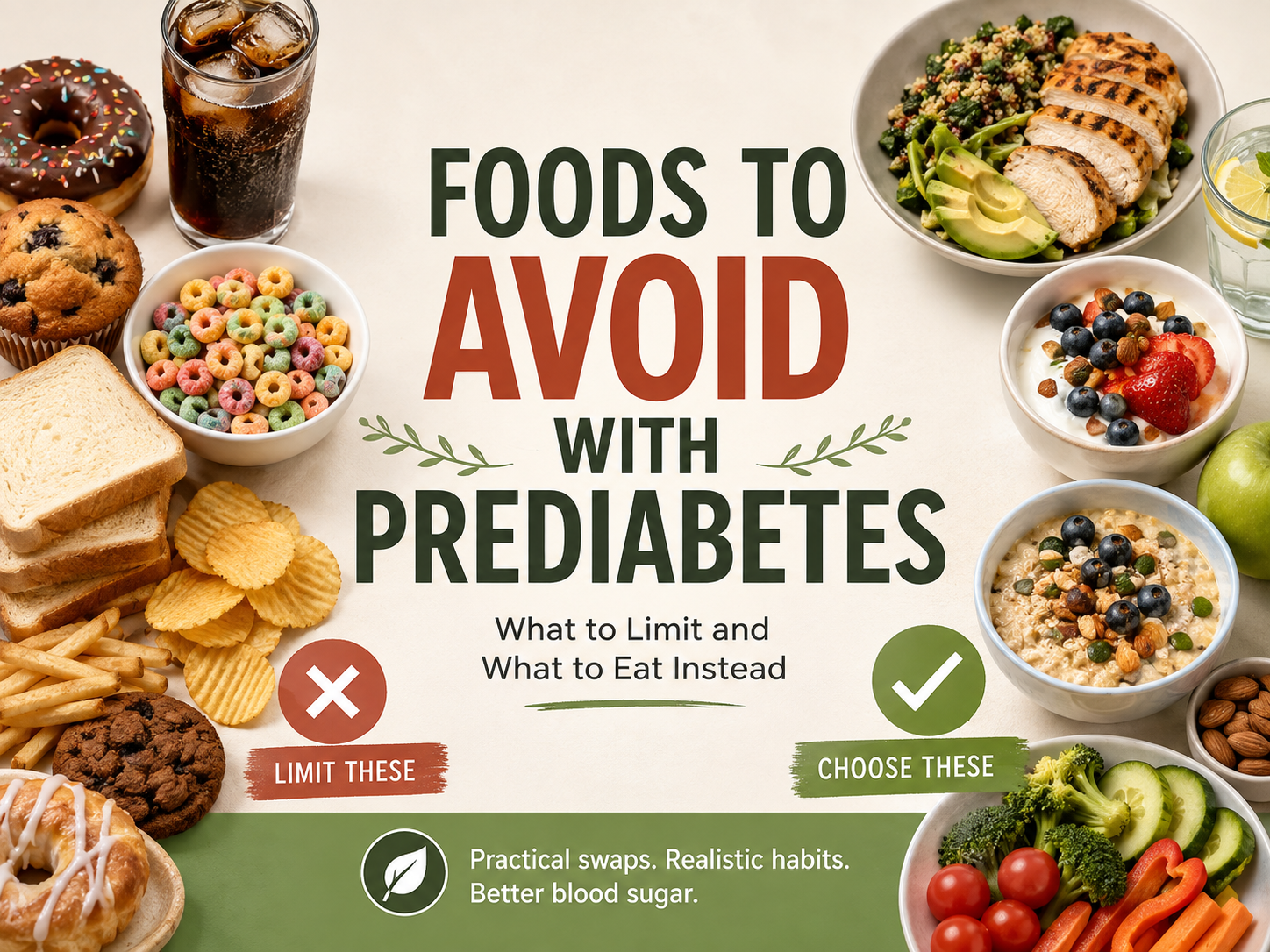
Foods to Avoid With Prediabetes: What to Limit and What to Eat Instead
Prediabetes doesn’t come with a list of forbidden foods. A better approach is to identify foods that can make blood sugar management harder, eat them less often, and replace them with choices you actually enjoy.
If you’ve recently learned that you have prediabetes, you may be wondering what you need to stop eating. Sugar? Bread? Rice? Fruit? Carbohydrates altogether?
Fortunately, managing prediabetes usually doesn’t require banning entire food groups. What matters more is your overall eating pattern: the types of carbohydrates you choose, portion sizes, how foods are combined, and how often highly processed foods and added sugars appear in your diet.
A Prediabetes-Friendly Cookbook
Knowing what to limit is useful, but knowing what to cook instead is even more important. A practical prediabetes cookbook can give you everyday meal ideas built around vegetables, fiber, protein, and balanced carbohydrates.
Browse Prediabetes Cookbooks on Amazon →Affiliate link — we may earn a commission.
1. Sugar-sweetened drinks
Soda, sweet tea, energy drinks, fruit drinks, and many sweetened coffee beverages can contain substantial amounts of added sugar in a form that is easy to consume quickly.
Unlike whole foods containing carbohydrates along with fiber, protein, or fat, sugary drinks can deliver a large amount of carbohydrate without making you feel particularly full.
Make water the convenient option
A reusable water bottle can help keep water nearby at work, in the car, or while you’re out walking — making it easier to replace routinely sweetened drinks.
Browse reusable water bottles → Affiliate link — we may earn a commission.2. Refined breakfast cereals
Many breakfast cereals are made primarily from refined grains and may also contain substantial added sugar. Some cereals marketed as healthy can still be relatively low in fiber.
If cereal is part of your routine, compare nutrition labels. Look at serving size, total carbohydrate, fiber, added sugar, and protein rather than relying only on claims printed on the front of the box.
3. Pastries, doughnuts, and sweet baked goods
Doughnuts, muffins, pastries, cinnamon rolls, and similar foods often combine refined flour, added sugar, and significant amounts of fat. They can be easy to overeat and may not keep you satisfied for very long.
You don’t have to promise yourself you’ll never eat a doughnut again. The more useful change is to stop making pastries the default breakfast.
Make Prediabetes Feel Less Complicated
Get practical wellness guidance, simple food ideas, and realistic habits you can actually use — delivered to your inbox.
Join the Wellness Diary → Helpful wellness content. No daily inbox overload.4. White bread and heavily refined grains
White bread, many crackers, refined pasta, and other highly processed grain products generally contain less fiber than their whole-grain counterparts.
This doesn’t mean every food labeled “whole grain” is automatically a good choice. Read the ingredient list and nutrition label, particularly when comparing packaged products.
5. Large portions of white rice or refined pasta
Rice and pasta don’t necessarily need to disappear from your diet. Portion size and what you eat with them matter.
A very large bowl of refined rice or pasta with little protein or vegetables is quite different from a meal where a smaller portion is paired with vegetables, beans, tofu, eggs, fish, poultry, or another protein source.
A Portion-Control Plate
A divided plate can make the plate method easier to visualize: plenty of non-starchy vegetables, a protein source, and a smaller portion for carbohydrate-rich foods.
View Portion-Control Plates on Amazon →Affiliate link — we may earn a commission.
6. Fruit juice
Fruit juice and whole fruit are not nutritionally identical. Whole fruit retains its fiber and generally takes longer to eat, while juice makes it easy to consume the carbohydrate from several pieces of fruit very quickly.
7. Sweetened yogurt
Yogurt can be a useful source of protein, but flavored varieties can contain significant amounts of added sugar.
Keep chia seeds in the pantry
Chia seeds can be added to plain yogurt, oatmeal, overnight oats, and other breakfasts for an easy boost of fiber.
Browse chia seeds → Affiliate link — we may earn a commission.8. Candy and frequent desserts
Candy, cookies, cakes, ice cream, and other desserts can contribute large amounts of added sugar and refined carbohydrates.
The key word is frequent. Managing prediabetes does not mean a birthday cake or occasional dessert has to become a source of anxiety. Instead, consider whether sweets have become an everyday habit.
9. Highly processed snack foods
Chips, crackers, snack cakes, and other packaged snack foods can make it easy to eat large portions without much protein or fiber.
Rather than trying to rely on willpower when you’re hungry, keep convenient alternatives available.
Reusable Meal-Prep Containers
Healthy food is much easier to choose when it’s already prepared. Use containers for chopped vegetables, yogurt, fruit, nuts, lunches, or leftovers.
View Meal-Prep Containers on Amazon →Affiliate link — we may earn a commission.
10. Foods marketed as “healthy” without checking the label
Granola, protein bars, smoothies, flavored oatmeal, low-fat snacks, and other foods marketed as healthy can vary enormously in their nutritional content.
Front-of-package claims are advertising. The nutrition facts panel and ingredient list tell you much more.
When comparing products, consider:
- Serving size
- Total carbohydrate
- Dietary fiber
- Added sugar
- Protein
- Ingredients
What about potatoes?
Potatoes contain carbohydrates, but that does not automatically make them off-limits. Preparation, portion size, and the rest of the meal matter.
A moderate portion of potato alongside vegetables and protein is very different from a large serving of fries accompanied by a sugary drink.
What about bananas?
Bananas contain naturally occurring carbohydrates and can fit into an overall balanced eating pattern. Portion size and individual glucose response vary. Pairing fruit with nuts, nut butter, yogurt, or another protein or fat source can make a more balanced snack.
What about bread?
You do not necessarily need to eliminate bread. Consider choosing a higher-fiber whole-grain option and paying attention to portion size and what you eat with it.
A Simple Digital Kitchen Scale
You don’t need to weigh everything you eat, but a kitchen scale can help you learn what typical portions of rice, pasta, cereal, nuts, and other foods actually look like.
View Digital Kitchen Scales on Amazon →Affiliate link — we may earn a commission.
The easiest way to start
If this list feels like a lot, don’t try to change all ten things tomorrow. Start with the food or drink you consume most often.
- Replace sugary drinks with unsweetened alternatives.
- Add protein to breakfast.
- Choose whole fruit instead of juice more often.
- Make vegetables a larger part of lunch or dinner.
- Reduce oversized portions of refined grains.
- Keep convenient, healthier snacks available.
One Practical Wellness Idea at a Time
Join Total Wellness Diary for approachable guidance on blood sugar, healthy eating, movement, sleep, weight management, and everyday wellness.
Get the Wellness Diary → Simple ideas designed for real life.Frequently asked questions
What is the worst food for prediabetes?
There isn’t one single food that determines whether prediabetes improves or progresses. An overall pattern high in sugar-sweetened beverages, refined carbohydrates, added sugars, and highly processed foods can make blood sugar management more difficult.
Do I need to stop eating sugar completely?
Not necessarily. Reducing added sugar is generally more realistic than trying to eliminate every gram of sugar. Whole foods such as fruit and dairy can also contain naturally occurring sugars.
Should people with prediabetes stop eating carbs?
Prediabetes does not automatically require eliminating carbohydrates. The type, quantity, portion size, and foods eaten alongside carbohydrates all matter.
Can I eat rice if I have prediabetes?
Rice can fit into an overall balanced diet. Portion size, type of rice, and whether it is paired with vegetables, protein, fiber, and healthy fats can all affect the overall meal.
Keep exploring
This article is one part of our growing prediabetes series. Continue with:
Affiliate disclosure
Some links on Total Wellness Diary are affiliate links. If you click one of these links and make a purchase, we may receive a commission at no additional cost to you. Affiliate relationships do not determine our editorial opinions or recommendations.
As an Amazon Associate I earn from qualifying purchases.
Medical disclaimer
This article is for general educational purposes only and is not medical advice. It is not intended to diagnose, treat, cure, or prevent any disease and is not a substitute for professional advice from a qualified healthcare provider.
Individual nutritional needs and blood glucose responses vary. Speak with your doctor, registered dietitian, or another qualified healthcare professional before making major dietary changes, particularly if you take medication or have other health conditions.
Leave a Reply