Prediabetes · Start Here
Prediabetes 101: What Your Numbers Are Telling You — and What To Do Next
8 min read · Reviewed for accuracy against current clinical guidance
A prediabetes diagnosis can feel like a warning shot. It’s actually something better: an early signal, with a wide window to act on it.
If a recent blood test came back with the word “prediabetes” on it, you’re not alone, and it’s not a life sentence. Prediabetes means your blood sugar is higher than normal, but not yet high enough to be classified as type 2 diabetes. It’s a warning label, not a diagnosis of disease — and for most people, it’s reversible with the right changes.
This page is meant to be the starting point. We’ll cover what the numbers mean, what actually moves them, and a few tools that make the day-to-day easier — some of which we link to as affiliates.
The Everything Easy Pre-Diabetes Cookbook
Discover 200 healthy and practical recipes designed to support people who want to manage prediabetes and develop healthier eating habits.
A helpful resource for preparing balanced meals without making healthy eating feel complicated.
View the Book on Amazon →Affiliate Disclosure: As an Amazon Associate, we earn from qualifying purchases. If you purchase through this affiliate link, we may receive a commission at no additional cost to you.
What “prediabetes” actually means
Prediabetes means your body isn’t using insulin as efficiently as it should. Glucose builds up in your bloodstream a bit more than it would in someone without insulin resistance, but your body is still managing it — for now. Left unaddressed over years, it can progress to type 2 diabetes. Addressed early, it very often doesn’t.
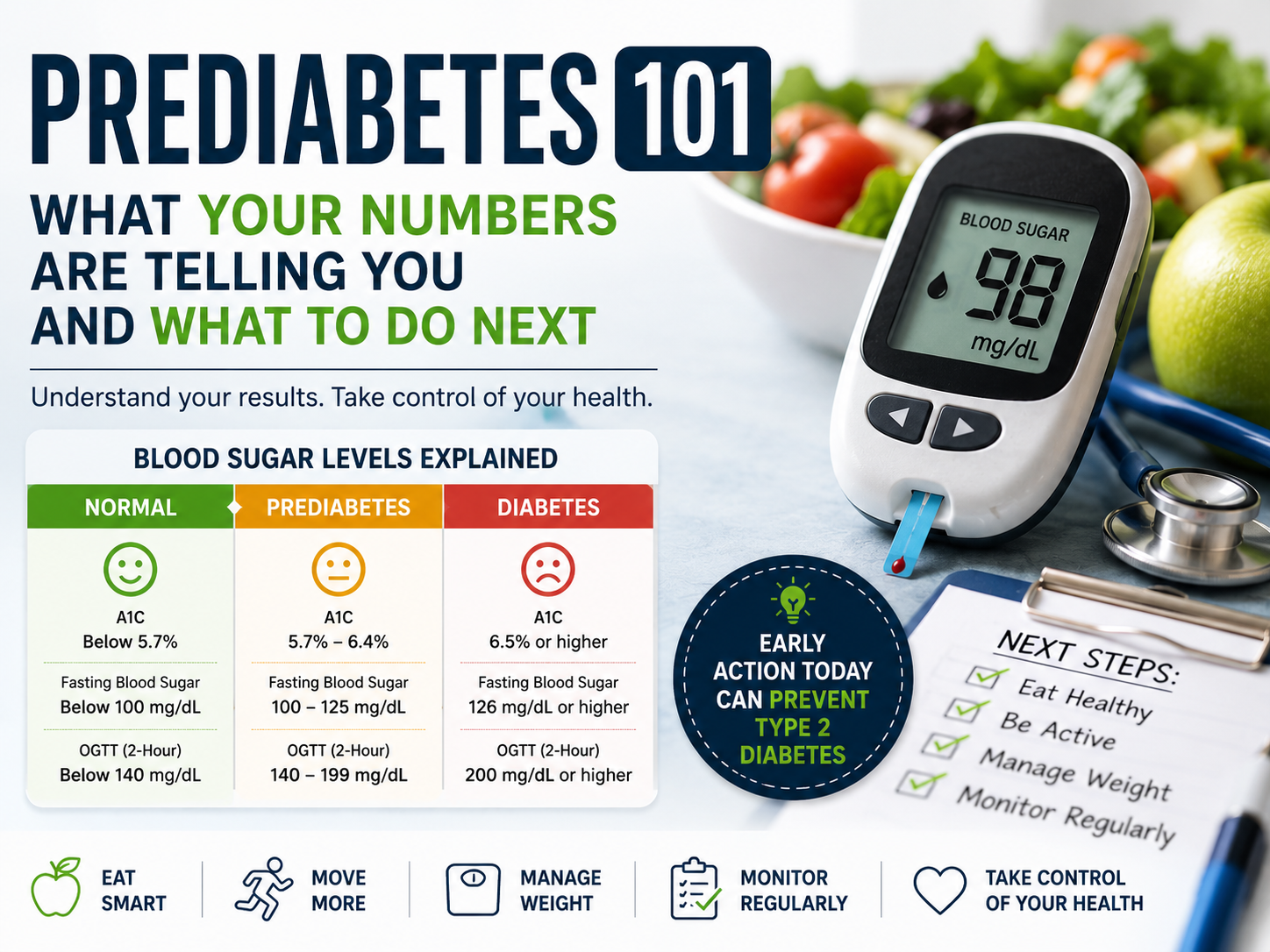
The numbers that define it
Doctors typically use one of three tests to diagnose prediabetes:
- A1C (average blood sugar over ~3 months): 5.7%–6.4% is considered prediabetes.
- Fasting blood glucose: 100–125 mg/dL is considered prediabetes.
- Oral glucose tolerance test (2-hour): 140–199 mg/dL is considered prediabetes.
Your doctor will tell you which test was used and what your specific number means for you — this article is educational, not a substitute for that conversation.
Track your numbers between doctor visits
An at-home blood glucose monitor can make it easier to see how food, sleep, and movement affect your readings between routine healthcare visits.
See our pick for at-home monitors → Affiliate link — we may earn a commission if you purchase.Can prediabetes be reversed?
For many people, blood sugar can return to a healthier range with sustained lifestyle changes. Research consistently points to several important areas, each of which we cover in its own guide:
Modest weight loss — even around 5–7% of body weight for people who have overweight — has been associated with meaningful reductions in diabetes risk. For someone weighing 200 lbs, that would be roughly 10–14 lbs.
A Simple Digital Body-Weight Scale
If weight management is part of the plan you and your healthcare professional have chosen, a reliable home scale can make it easier to follow long-term trends.
Focus on gradual changes over time rather than day-to-day fluctuations. Weight is only one part of the overall picture.
View Digital Scales on Amazon →Affiliate Disclosure: As an Amazon Associate, we earn from qualifying purchases. If you purchase through this affiliate link, we may receive a commission at no additional cost to you.
Everyday tools that make this easier
None of these are required to manage prediabetes well — food, movement, sleep, and guidance from your healthcare team do the heavy lifting. But for people who like structure, a few tools can be useful.
A fiber-first cookbook or meal plan
A simple prediabetes-focused meal plan can make it easier to build meals around vegetables, whole grains, legumes, lean proteins, and other fiber-rich foods without having to decide what to cook every day.
Browse recommended meal plans → Affiliate link — we may earn a commission if you purchase.A basic fitness tracker
You don’t need anything fancy. A simple tracker can make it easier to see your daily movement patterns and encourage more consistent walking and activity.
See our pick for step tracking → Affiliate link — we may earn a commission if you purchase.When to talk to a doctor
Prediabetes often has no obvious symptoms, which is one reason routine screening and follow-up matter. Talk to your doctor if:
- You have risk factors such as family history, higher body weight, limited physical activity, or a history of gestational diabetes.
- You’ve had a prediabetes reading and are unsure when you should be tested again.
- You notice symptoms such as increased thirst, unusual fatigue, or frequent urination, particularly if they are new or worsening.
Comfortable Walking Shoes
Regular movement is an important part of a healthy lifestyle, and a comfortable pair of walking shoes can make daily walks easier to maintain.
Look for a pair that feels comfortable, fits properly, and suits your usual walking surface and activity level.
Browse Walking Shoes on Amazon →Affiliate Disclosure: As an Amazon Associate, we earn from qualifying purchases. If you purchase through this affiliate link, we may receive a commission at no additional cost to you.
Frequently asked questions
How fast can prediabetes turn into type 2 diabetes?
It varies considerably from person to person. Some people remain in the prediabetes range for years, while others progress more quickly. Lifestyle changes, underlying health conditions, genetics, weight, medications, and other factors can all influence risk. Regular follow-up with your healthcare professional is important.
Do I need medication for prediabetes?
Not everyone with prediabetes needs medication. Lifestyle changes are often a central part of treatment, while medication may be appropriate for some people based on their individual risk factors and medical history. This decision should be made with your healthcare provider.
Is prediabetes the same as insulin resistance?
They are closely related but not identical. Insulin resistance means the body’s cells are responding less effectively to insulin. Prediabetes describes blood glucose levels that are above the normal range but below the diagnostic threshold for diabetes.
Affiliate disclosure
Total Wellness Diary is a participant in one or more affiliate marketing programs. This means that if you click on certain links in this article and make a purchase, we may earn a commission — at no additional cost to you.
As an Amazon Associate, we earn from qualifying purchases. We aim to recommend products and resources that may genuinely be useful to our readers, and affiliate relationships do not determine our editorial opinions.
Medical disclaimer
This article is for general educational purposes only and is not medical advice. It is not a substitute for professional diagnosis, treatment, or guidance from a qualified healthcare provider.
Always talk to your doctor or another qualified healthcare professional before making significant changes related to a prediabetes diagnosis, starting a new exercise routine, changing your diet, or changing medications.